
BẢO TÀNG HẢI DƯƠNG HỌC
Museum of Oceanography
Thuyết minh tự động
Audio Guides
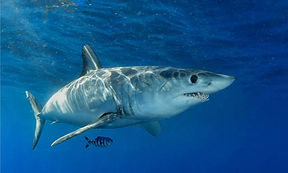
Cá Nhám thu
Shortfin Mako Shark
Cá Nhám thu phân bố rộng ở Thái Bình Dương, Đại Tây Dương và Ấn Độ Dương, di chuyển đường dài để kiếm ăn và sinh sản. Loài cá nổi này sống từ mặt nước đến độ sâu 150–740 m, thích vùng biển nhiệt đới và ôn đới (17–20°C) nhưng vẫn chịu lạnh nhờ khả năng giữ nhiệt cơ thể. Được xem là loài cá mập nhanh nhất thế giới (tốc độ tới 70 km/h), chúng năng động và thường lên gần mặt nước. Cá Nhám thu hiếm khi tấn công người, nhưng do khai thác quá mức, loài này được IUCN xếp vào nhóm dễ bị tổn thương (Vulnerable).
The Shortfin Mako Shark is found throughout the Pacific, Atlantic, and Indian Oceans, migrating thousands of kilometers each month. It inhabits surface waters down to 150–740 m and prefers warm offshore tropical–temperate seas (17–20°C), but can also tolerate colder waters (5–11°C) due to its ability to retain body heat. Known as the fastest shark, it can reach speeds up to 70 km/h and is highly active, often swimming near the surface. Despite its power, only three attacks on humans have been reported since 1974. Due to overfishing, the species is listed as Vulnerable by the IUCN.


NGHE THUYẾT MINH VỀ MẪU VẬT
Audio Guide for This Specimen
Thông tin khoa học
Scientific Info
Tên khoa học:
Isurus oxyrinchus.

Phân loại:
Kích thước loài:
Đặc điểm nổi bật:
Thức ăn:
Sinh sản:
Tình trạng bảo tồn:
Lớp: Chondrichthyes, Bộ: Lamniformes, Họ: Lamnidae.
Dài tới 4 m; nặng tối đa ~600 kg.
Cá mập nhanh nhất thế giới; hàm khỏe, thân thon dài; khả năng giữ nhiệt cơ thể.
Cá nổi, mực và các động vật biển cỡ vừa.
Đẻ con (noãn thai sinh); con non phát triển trong cơ thể mẹ.
IUCN: Sẽ nguy cấp.

Scientific name:
Isurus oxyrinchus
Classification:
Class: Chondrichthyes, Order: Lamniformes, Family: Lamnidae.
Size:
Up to 4 m long; up to ~600 kg.
Key traits:
Fastest shark species; streamlined body; powerful jaws; regional endothermy (ability to retain body heat).
Diet:
Pelagic fishes, squid, and medium-sized marine animals.
Reproduction:
Ovoviviparous; pups develop inside the mother.

Conservation status:
IUCN: Vulnerable.